
What if the words we use to impress others become the walls that block us from a real connection? Shakespeare satirises the ornate language of the Renaissance by using puns and alliteration to highlight the absurd pretensions of the characters. Uncover the metaphors and structural ironies within the text by starting this Love’s Labour’s Lost Literary Devices Quiz.

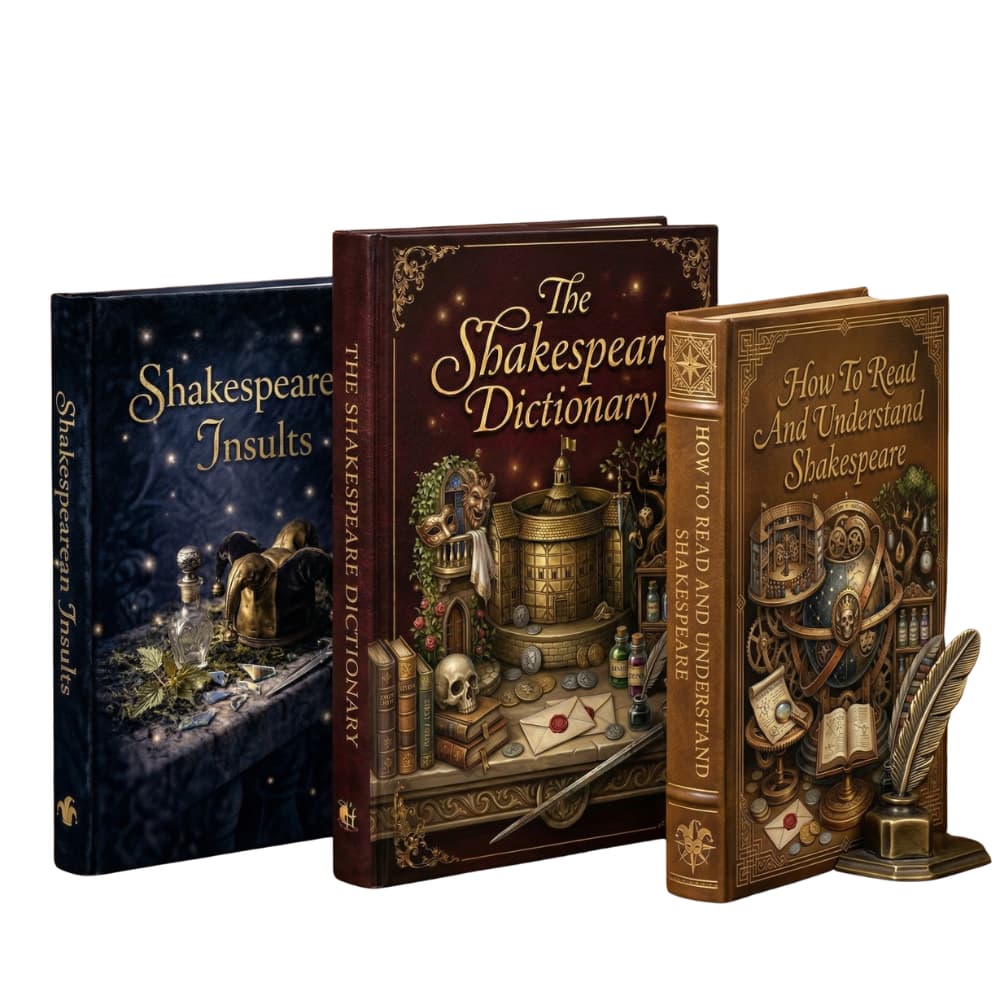
Shakespeare Essentials $19.99
Unlock the wit, wisdom, and world of William Shakespeare with this comprehensive digital bundle.
- How To Read And Understand Shakespeare
- The Shakespeare Dictionary
- Shakespearean Insults
This trio of guides provides everything you need to conquer the Elizabethan era.
Love’s Labour’s Lost Literary Devices Quiz Questions
- What literary device is most prominent throughout Love’s Labour’s Lost?
- The King’s scholarly vow in the opening scene serves as an example of
- Berowne’s witty speeches often rely on
- The use of rhymed couplets in the play is an example of
- The mistaken love letters subplot demonstrates
- When Berowne mocks the vow to avoid women, his tone demonstrates
- The play’s title “Love’s Labour’s Lost” is an example of
- The Nine Worthies pageant serves as a
- When Rosaline teases Berowne for his wit, Shakespeare uses
- The exchange between Holofernes and Nathaniel illustrates
- The play’s sudden ending after the King’s death uses
- The men’s disguises as Muscovites employ
- The repeated use of “light” and “dark” imagery in romantic scenes represents
- Armado’s flowery speech exemplifies
- Costard’s malapropisms create
- When Berowne calls love “a madness most discreet,” Shakespeare uses
- The play’s witty word exchanges between lovers exemplify
- The use of Latin phrases by Holofernes displays
- Berowne’s speech on love as a teacher demonstrates
- The Princess’s restraint contrasts the King’s impulsiveness, forming a
- The mockery of the men’s intellectualism is an example of
- The ending’s lack of resolution emphasizes
- When the men spy on one another confessing love, it creates
- Rosaline’s use of “painted rhetoric” to describe men’s flattery is
- Boyet’s commentary throughout the play provides
- The use of letters as plot devices exemplifies
- Armado’s love for Jaquenetta functions as
- The play’s structure of mirrored scenes between men and women reflects
- The dialogue’s reliance on rhetorical questions emphasizes
- The recurring motif of learning and ignorance illustrates