
The language of the 16th century mercantile world is full of particular terms like usury, ducats, and argosies that name the economic stakes of the play. Prepare to translate the prose with the first definition in this The Merchant Of Venice Vocabulary Quiz.

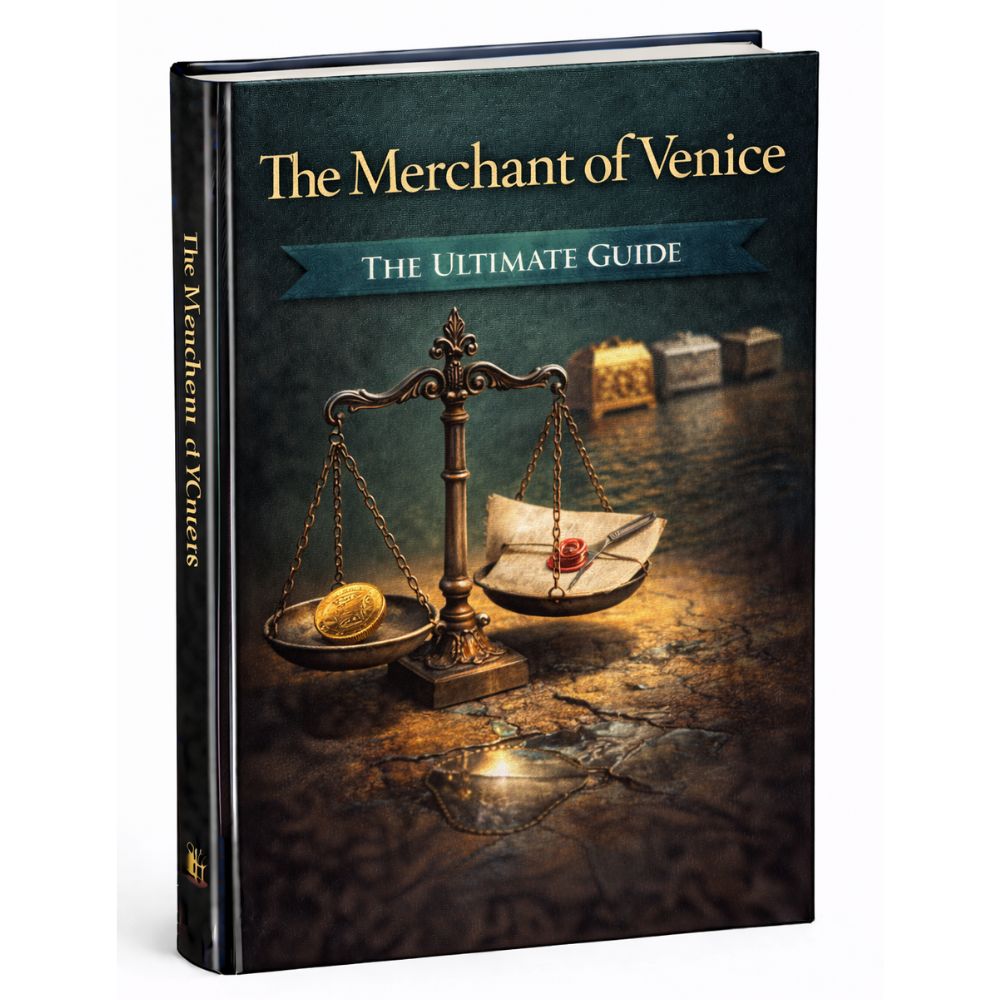
The Merchant of Venice | The Ultimate Guide $19.99
This guide turns The Merchant Of Venice into a clear, organised framework.
It explains what happens, why it matters, and what Shakespeare is actually saying.
- Expert Context: The historical facts that actually explain the characters’ choices.
- Character Maps: Guides on relationships.
- Scene Summaries: Clear breakdowns of every act.
- Top Quotes: Essential lines with the analysis.
- Key Themes: Simple explanations of Justice, Greed & Friendship.
- Exam Prep: “Common Traps” and essay questions.
The Merchant Of Venice Vocabulary Quiz Questions
- What does “obdurate” describe in the Duke’s reference to Shylock?
- What is meant by the term “lottery” in relation to Portia’s marriage?
- What does “mirth” mean when Gratiano speaks of revelry?
- What does “courtesy” signify in Elizabethan context?
- What does “villainy” mean in Shylock’s speech?
- What does “prodigal” mean in reference to Bassanio?
- What does “oath” refer to in Shylock’s demand for justice?
- The word “lodged” in “my lodged hate” conveys what meaning?
- What does “tribute” mean in Venetian law?
- What does “haste” signify when characters speak of urgent travel?
- What is the meaning of “tedious” when used by Portia?
- The word “semblance” in the play refers to what?
- What does “confound” mean in Shylock’s threats?
- What does “strife” mean when describing Venice’s conflicts?
- What does “woo” mean in the context of Bassanio’s actions?
- The word “miser” refers to which type of person?
- What does “charter” mean in Venetian law?
- What does the word “ducat” mean in the play?
- In Elizabethan English, what does “usury” refer to?
- What does “bond” mean in The Merchant of Venice?
- What does “flesh” symbolize in Shylock’s bond?
- The term “gentle” in the play often carries what secondary meaning?
- What is the meaning of “gratify” as used in the play?
- In Shakespeare’s time, “forfeit” most nearly meant what?
- What does “venture” refer to when Antonio speaks of his ships?
- What does “casket” mean in the context of Portia’s test?
- The word “exacting” as applied to Shylock means what?
- What does “argosy” refer to in Antonio’s speeches?
- What does “jest” mean in Launcelot’s dialogue?
- The word “demeanor” most nearly means what?