
Why does Shakespeare lean so heavily on the play-within-a-play device and biting stichomythia to tell a story of domestic conquest? This The Taming Of The Shrew Literary Devices Quiz looks at the metaphors and motifs that make this farce a complex study of human behaviour.

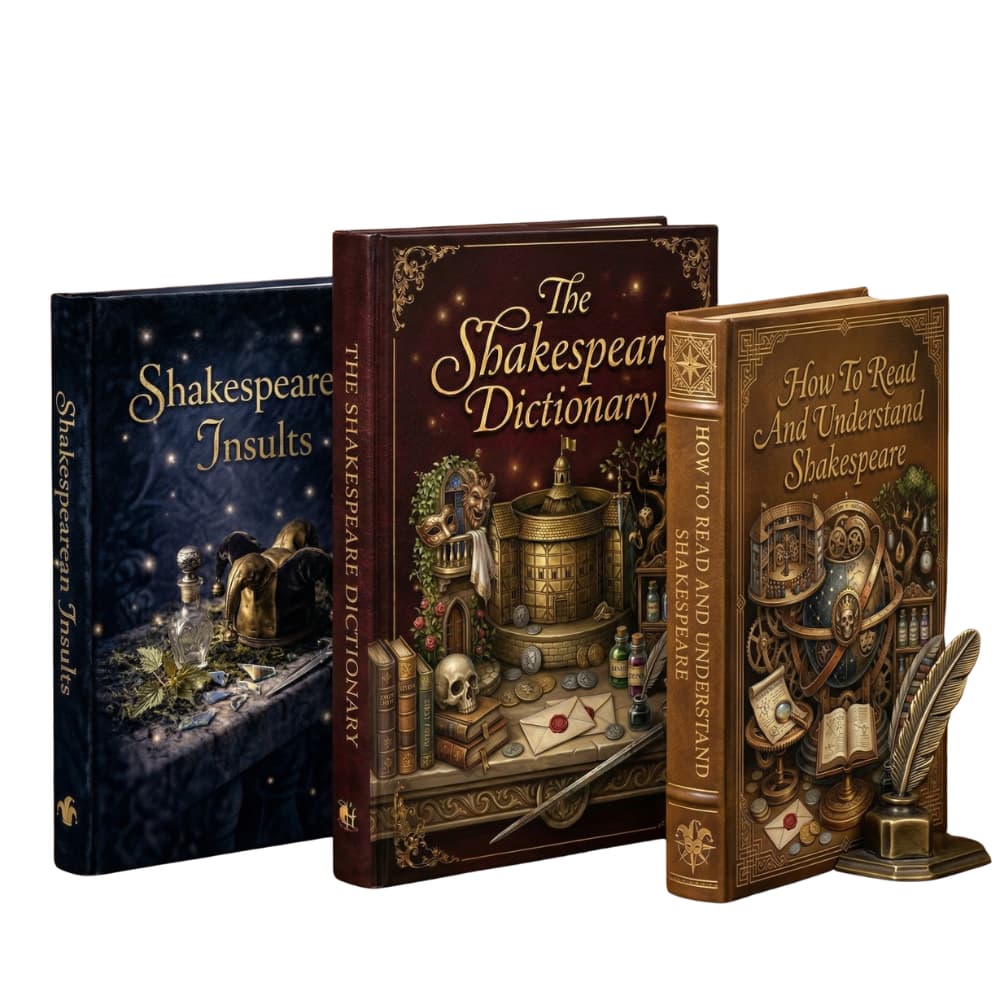
Shakespeare Essentials $19.99
Unlock the wit, wisdom, and world of William Shakespeare with this comprehensive digital bundle.
- How To Read And Understand Shakespeare
- The Shakespeare Dictionary
- Shakespearean Insults
This trio of guides provides everything you need to conquer the Elizabethan era.
The Taming Of The Shrew Literary Devices Quiz Questions
- What literary device is used when Petruchio compares Katherina to a falcon to be trained?
- When Katherina says “If I be waspish, best beware my sting,” she uses
- The line “He kills her in her own humor” demonstrates which device?
- The disguise plot involving Lucentio and Tranio exemplifies
- When Bianca and Katherina’s personalities contrast sharply, it is an example of
- The Lord’s trick on Christopher Sly in the Induction serves as a
- Petruchio’s exaggerated claims of Katherina’s gentleness use
- When Baptista says Katherina is “curst and shrewd,” Shakespeare uses
- The phrase “to tame a shrew” throughout the play is a recurring
- When Katherina’s speech at the end praises obedience, it illustrates
- The use of Latin lessons between Bianca and Lucentio hides love messages, showing
- When Petruchio calls the sun the moon, this is an example of
- The “taming” of Katherina is primarily developed through
- When Petruchio starves Katherina, the cruelty is softened through
- The repeated references to clothing and appearance suggest the theme of
- When Petruchio says “I find you passing gentle,” it is an example of
- Shakespeare’s use of exaggerated actions and witty exchanges belongs to
- When Petruchio’s behavior mocks courtship traditions, it demonstrates
- The name “Minola” symbolically connects Baptista’s family to
- The use of mistaken identities throughout the play is an example of
- The dialogue between servants and masters often provides
- The phrase “I am as peremptory as she proud-minded” uses
- When Petruchio calls Katherina “my super-dainty Kate,” it illustrates
- The repeated references to money and dowries create
- The constant play between reality and illusion is developed through
- When Petruchio contradicts Katherina about the sun and moon, Shakespeare uses
- The audience’s knowledge of disguises unknown to Baptista creates
- Katherina’s transformation from rebellion to obedience is expressed through
- The scene where servants bungle their duties provides
- When Katherina calls herself “ashamed that women are so simple,” it shows