
What if life in the wilderness is more honest, more noble than the hollow rituals of a corrupt palace? The Cymbeline Act 3 Scene 3 Quiz – The mountain dwellers, Belarius, Guiderius and Arviragus. Consider breeding & heritage in the wild.

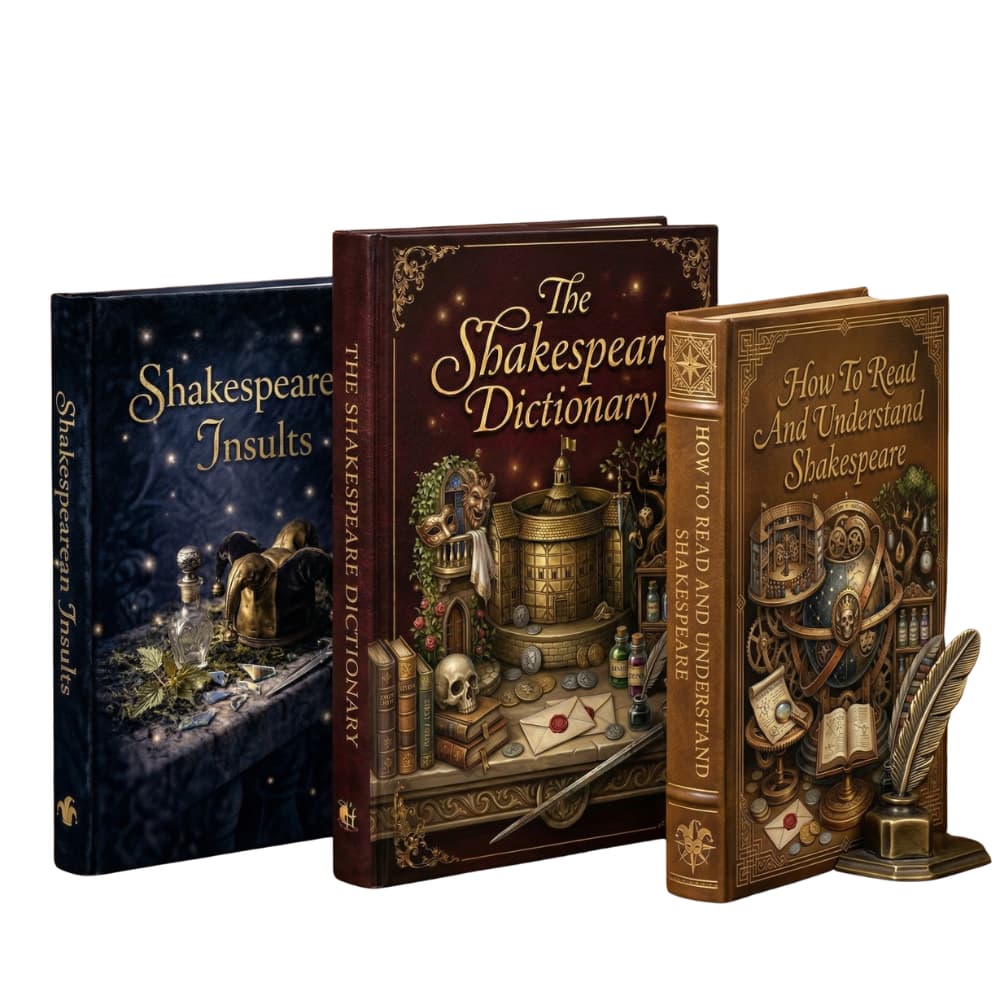
Shakespeare Essentials $19.99
Unlock the wit, wisdom, and world of William Shakespeare with this comprehensive digital bundle.
- How To Read And Understand Shakespeare
- The Shakespeare Dictionary
- Shakespearean Insults
This trio of guides provides everything you need to conquer the Elizabethan era.
Cymbeline Act 3 Scene 3 Quiz Questions
- Where does Act 3 Scene 3 take place?
- Which characters are first introduced in this scene?
- What is Belarius’s relationship to Guiderius and Arviragus?
- What is Belarius’s former role in Cymbeline’s kingdom?
- What crime was Belarius falsely accused of?
- What are the true identities of Guiderius and Arviragus?
- What names do Guiderius and Arviragus go by in exile?
- Why did Belarius steal Cymbeline’s sons?
- What setting contrasts with the royal court in this scene?
- How do Guiderius and Arviragus view their rustic life?
- What attitude does Belarius have toward his exile?
- What theme emerges strongly in this scene?
- What quality do the brothers display toward Belarius?
- What does Belarius teach the young men about life?
- What emotion dominates Belarius’s reflections on the past?
- How does Shakespeare contrast Belarius’s wisdom with the brothers’ youth?
- What does Belarius call his life in exile?
- What do Guiderius and Arviragus wish to experience?
- What natural imagery dominates this scene?
- What idea does Belarius express about fortune?
- How does the audience’s knowledge differ from the brothers’?
- What does Belarius call Cymbeline’s court?
- What aspect of human nature does Belarius condemn?
- What lesson about exile does Belarius share?
- What do Guiderius and Arviragus symbolize in this scene?
- What tone does Shakespeare create through the cave dialogue?
- What does Belarius’s speech foreshadow?
- What theme of fate is suggested by their hidden identities?
- What does this scene reveal about leadership?
- How does this scene change the pace of the play?