
What if the greatest threat to a kingdom was not an invading army, but the mounting fury of its own people? The Henry VI Part 2 Act 4 Quiz examines the connection between mob justice and the death of the rule of law in the chaos of Jack Cade’s rebellion. Can a weak king survive if even the streets of London are against him?

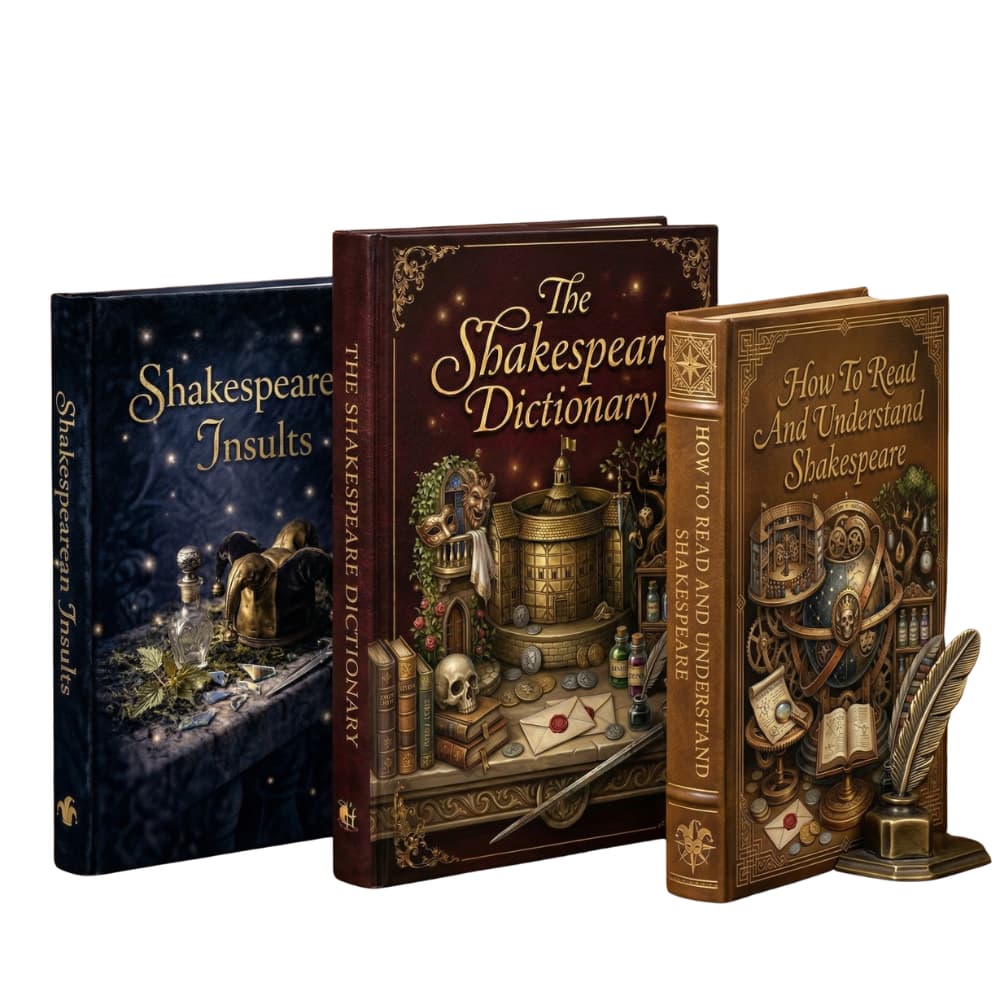
Shakespeare Essentials $19.99
Unlock the wit, wisdom, and world of William Shakespeare with this comprehensive digital bundle.
- How To Read And Understand Shakespeare
- The Shakespeare Dictionary
- Shakespearean Insults
This trio of guides provides everything you need to conquer the Elizabethan era.
Henry VI Part 2 Act 4 Quiz Questions
- Where does Act 4 Scene 1 take place?
- Who is being transported into exile at the start of Act 4?
- Which ship intercepts Suffolk’s vessel on the coast?
- How does Suffolk react to being captured?
- What is Suffolk’s fate in Act 4 Scene 1?
- Who orders Suffolk’s death?
- What symbolic gesture follows Suffolk’s execution?
- Where does Act 4 Scene 2 take place?
- Who leads the uprising in Scene 2?
- Under what name does York send Cade to stir rebellion?
- What grievance do the rebels express at the start of the scene?
- What promise does Cade make to his followers?
- What absurd law does Cade propose for his new rule?
- What famous line does Cade’s follower Dick the Butcher say?
- Where does Act 4 Scene 3 take place?
- Who joins Cade’s rebellion in Scene 3?
- What city becomes the rebels’ main target?
- Where does Act 4 Scene 4 take place?
- How does Queen Margaret react to Suffolk’s death?
- Who brings news of the rebellion to King Henry?
- What is Henry’s first instinct upon hearing of Cade’s rebellion?
- Where does Act 4 Scene 5 take place?
- Who defends the Tower of London during Cade’s revolt?
- Where does Act 4 Scene 6 take place?
- What happens when Cade’s rebels enter London?
- What is Cade’s attitude toward law and learning?
- Who delivers a speech mocking Cade’s ignorance?
- What is Lord Say accused of by Cade’s men?
- What is Lord Say’s fate?
- By the end of Act 4, what theme dominates the play’s tone?