
The court language of the 15th century was a complex mixture of feudal obligation and emerging political rhetoric. To understand the dialogue of the period one must know the particular terminology of chivalry, treason, and lineage. “Henry VI Part 2 Vocabulary Quiz” Get your brain in gear for some word fun!

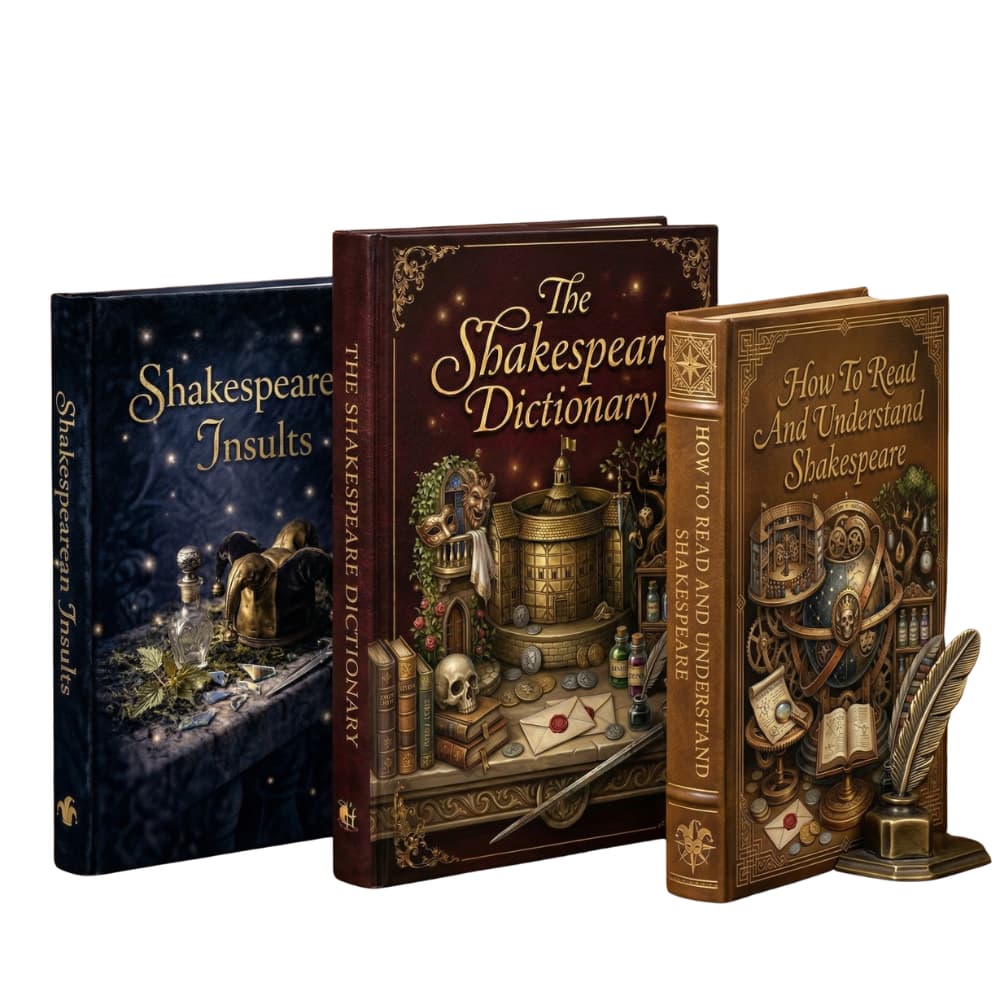
Shakespeare Essentials $19.99
Unlock the wit, wisdom, and world of William Shakespeare with this comprehensive digital bundle.
- How To Read And Understand Shakespeare
- The Shakespeare Dictionary
- Shakespearean Insults
This trio of guides provides everything you need to conquer the Elizabethan era.
Henry VI Part 2 Vocabulary Quiz Questions
- What does the word “raught” mean in the context of Shakespeare’s language?
- In the play, “attaint” most nearly means what?
- What does “piteous” mean when used to describe a character’s plea?
- The word “beseech” as used by Henry means what?
- When someone is called a “traitor,” what is the most accurate meaning in the play’s context?
- In Shakespeare’s diction, “marry” is most often used as what?
- What does “peril” refer to in the context of Gloucester’s warning?
- What does “dally” mean when characters speak of delaying action?
- When Suffolk says “thou dost usurp my place,” what does “usurp” mean?
- What is meant by “banish’d” when describing Suffolk’s punishment?
- What does “wont” mean when Henry refers to his habitual mercy?
- In Shakespearean English, “nay” means what?
- What does “choler” represent when a character’s temper is mentioned?
- What does the word “covetous” imply when describing a noble’s nature?
- What does “piteous spectacle” mean in Eleanor’s punishment scene?
- The term “valiant” as used to describe warriors means what?
- When York speaks of “ambition,” what is implied?
- What does “hie thee hence” mean when used as a command?
- The term “malice” as used by Warwick means what?
- What is the meaning of “caitiff” when used as an insult?
- When a character speaks of “piteous moan,” what does “moan” signify?
- What does “foe” mean in the political conflicts of the play?
- When Henry says “alas,” what emotion is expressed?
- What does “vile” mean when characters denounce treachery?
- What is the best meaning of “rebellion” in York’s plans?
- When a character “faints,” what is literally happening?
- What does “lament” mean when Henry mourns Gloucester?
- What is meant by “haughty” in describing Margaret’s demeanor?
- When Cade speaks of “plenteous spoil,” what does “spoil” mean?
- The term “usury” in the play refers to what?