
Why do we see beauty in the metaphors of a play so marked by physical mutilation and horror? This Titus Andronicus Literary Devices Quiz tests your ability to look past the gore and discover the deeper use of personification and dramatic irony throughout the script.

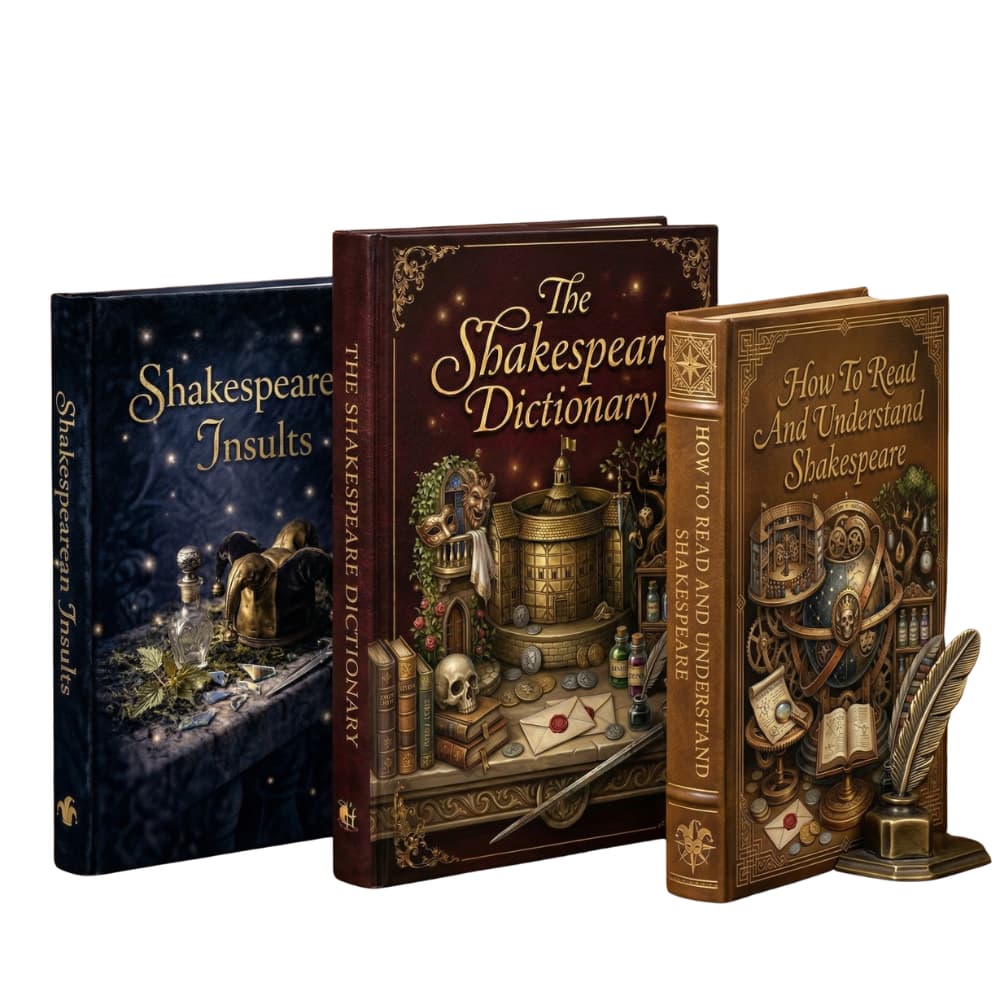
Shakespeare Essentials $19.99
Unlock the wit, wisdom, and world of William Shakespeare with this comprehensive digital bundle.
- How To Read And Understand Shakespeare
- The Shakespeare Dictionary
- Shakespearean Insults
This trio of guides provides everything you need to conquer the Elizabethan era.
Titus Andronicus Literary Devices Quiz Questions
- What literary device is most used in the gruesome descriptions of violence throughout the play?
- When Lavinia’s mutilation is compared to Philomela’s myth, this is an example of
- The repetition of “Rome” in political speeches is an example of
- Aaron’s delight in evil without remorse best represents
- When Titus says, “If there were reason for these miseries, then into limits could I bind my woes,” he uses
- The image of Lavinia writing with a stick held between her stumps is an example of
- The frequent mentions of hands in the play represent
- When Titus kills Tamora’s sons and bakes them in a pie, the act reflects
- The title “Titus Andronicus” follows Shakespeare’s convention of
- Aaron’s baby symbolizes
- The line “The hunted deer stands at the brook and drinks” is an example of
- Titus’s madness is presented through
- The recurring use of feasts and food imagery symbolizes
- The pit where Bassianus dies functions as
- When Tamora pleads for mercy early in the play, Shakespeare uses
- The “handless daughter” of Titus represents
- When Titus speaks to Lavinia though she cannot reply, it’s an example of
- Aaron’s speech about his sins uses
- The use of classical mythology in Lavinia’s story is
- Titus’s sarcastic tone toward Tamora in Act 5 demonstrates
- The phrase “crimson river of blood” is an example of
- When Marcus says, “O noble father, you lament in vain,” he uses
- The fly-killing scene employs
- The mutilation of Lavinia is a visual
- The child of Aaron and Tamora serves as
- The phrase “hands are instruments of faith” functions as
- The gothic tone of the play is reinforced by
- When Titus says, “Terras Astraea reliquit” (Justice has fled the earth), he uses
- The frequent animal comparisons create a tone of
- The wordplay on “hand” and “handle” throughout the play is an example of