
The Elizabethan diction of this romance is rife with archaic terms for botany, jewellery, and military rank. The Cymbeline Vocabulary Quiz is built on your knowledge of some words — like jack-an-apes and ruddock — and your ability to define them. Before the first question appears, refine your words.

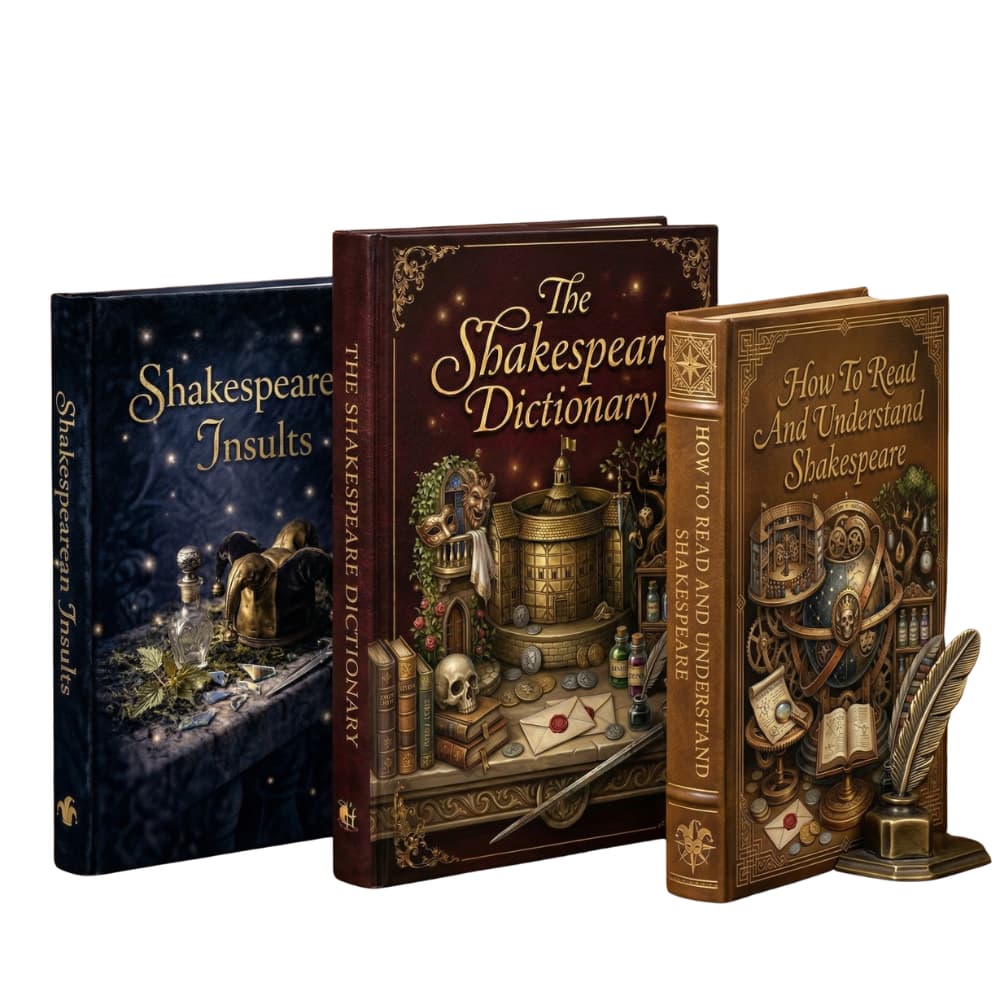
Shakespeare Essentials $19.99
Unlock the wit, wisdom, and world of William Shakespeare with this comprehensive digital bundle.
- How To Read And Understand Shakespeare
- The Shakespeare Dictionary
- Shakespearean Insults
This trio of guides provides everything you need to conquer the Elizabethan era.
Cymbeline Vocabulary Quiz
- What does the word “banished” mean in the context of Posthumus’s fate
- In the play, “churlish” most nearly means
- The word “treachery” refers to
- When Imogen is called “divine,” the word suggests
- The term “valor” as used to describe Posthumus means
- “Villainy” in the play refers to
- The Queen’s “malice” can best be defined as
- When Imogen calls Pisanio “honest,” she means
- The word “treason” in Cymbeline means
- The word “repent” means to
- “Fortune” as used in the play refers to
- To “avenge” means to
- The word “noble” refers to someone who is
- When Cloten is described as “foolhardy,” it means
- The word “disdain” means
- “Lamentation” in mourning scenes means
- When someone “implores” another, they
- The word “virtue” refers to
- “Enmity” between nations means
- When someone is called “base,” it means
- The word “usurp” means to
- To “commend” someone is to
- The term “wretched” means
- When Imogen “muses” upon her thoughts, she
- The word “baneful” means
- When someone is “disguised,” they are
- The term “heed” means to
- “Discord” in the play means
- When something is “auspicious,” it is
- To “abide” by a command means to