
What if the metaphors of sickness and decay that run through the text are not just metaphors, but the real protagonists of this Shakespearean history? The Henry IV Part 2 Literary Devices Quiz concentrates on the use of personification and irony that helps to create the impression of a world in decline.

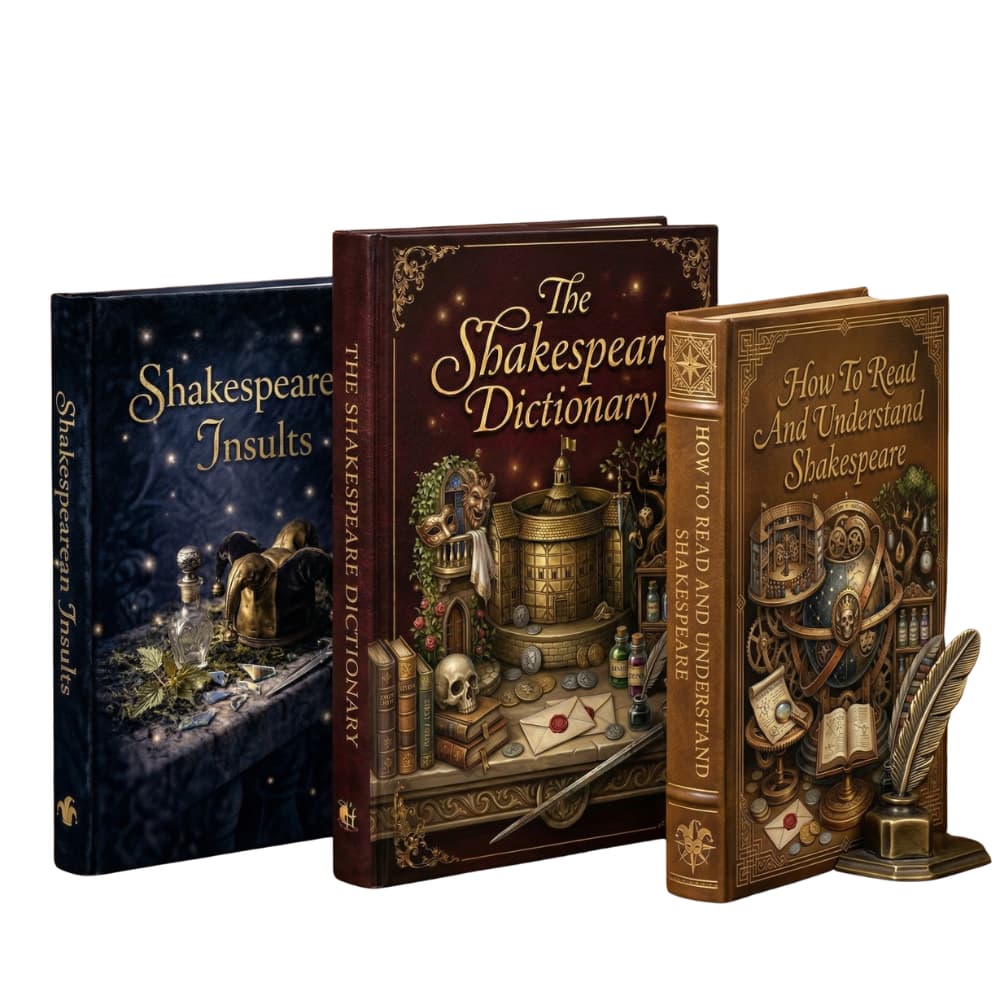
Shakespeare Essentials $19.99
Unlock the wit, wisdom, and world of William Shakespeare with this comprehensive digital bundle.
- How To Read And Understand Shakespeare
- The Shakespeare Dictionary
- Shakespearean Insults
This trio of guides provides everything you need to conquer the Elizabethan era.
Henry IV Part 2 Literary Devices Quiz Questions
- What literary device opens Henry IV Part 2?
- The line “Uneasy lies the head that wears a crown” is an example of
- Falstaff’s humorous exaggerations often use
- The repeated motif of sickness throughout the play symbolizes
- When the King envies the sleep of common men, Shakespeare uses
- Rumour speaking in the prologue is an example of
- Shakespeare’s depiction of Falstaff’s corruption serves as
- The King’s insomnia symbolizes
- The recurring theme of disguise in the tavern scenes represents
- When Falstaff calls recruits “food for powder,” he uses
- The phrase “Rumour is a pipe blown by surmises” uses
- Lady Percy’s grief over Hotspur employs
- The Archbishop’s moral arguments contain
- Falstaff’s wit and wordplay frequently rely on
- The King’s speech on sleep uses which imagery type?
- The contrast between court and tavern life is an example of
- When Falstaff jokes about “dying of a sweat,” Shakespeare uses
- Falstaff’s manipulation of others demonstrates
- The theme of age and youth is developed through
- Falstaff’s “I am not only witty in myself” line uses
- King Henry’s fear of rebellion acts as
- The King’s guilt over Bolingbroke’s rise is conveyed through
- The Boar’s Head Tavern setting symbolizes
- Falstaff’s treatment of Justice Shallow includes
- The contrast between Prince Hal’s friends and royal peers reveals
- Shakespeare’s use of prose for Falstaff reflects
- The King’s speeches use mostly
- Falstaff’s tavern scenes rely on
- Rumour’s speech uses imagery of
- Prince John’s deception of the rebels shows