
The language of the battlefield is a rough dialect full of words of surrender, of execution, of dynastic claim. In this Henry VI Part 3 Vocabulary Quiz, we look at the particular words Shakespeare uses to describe the bloody transition from the Middle Ages into the Renaissance. Select the initial term to begin the examination.

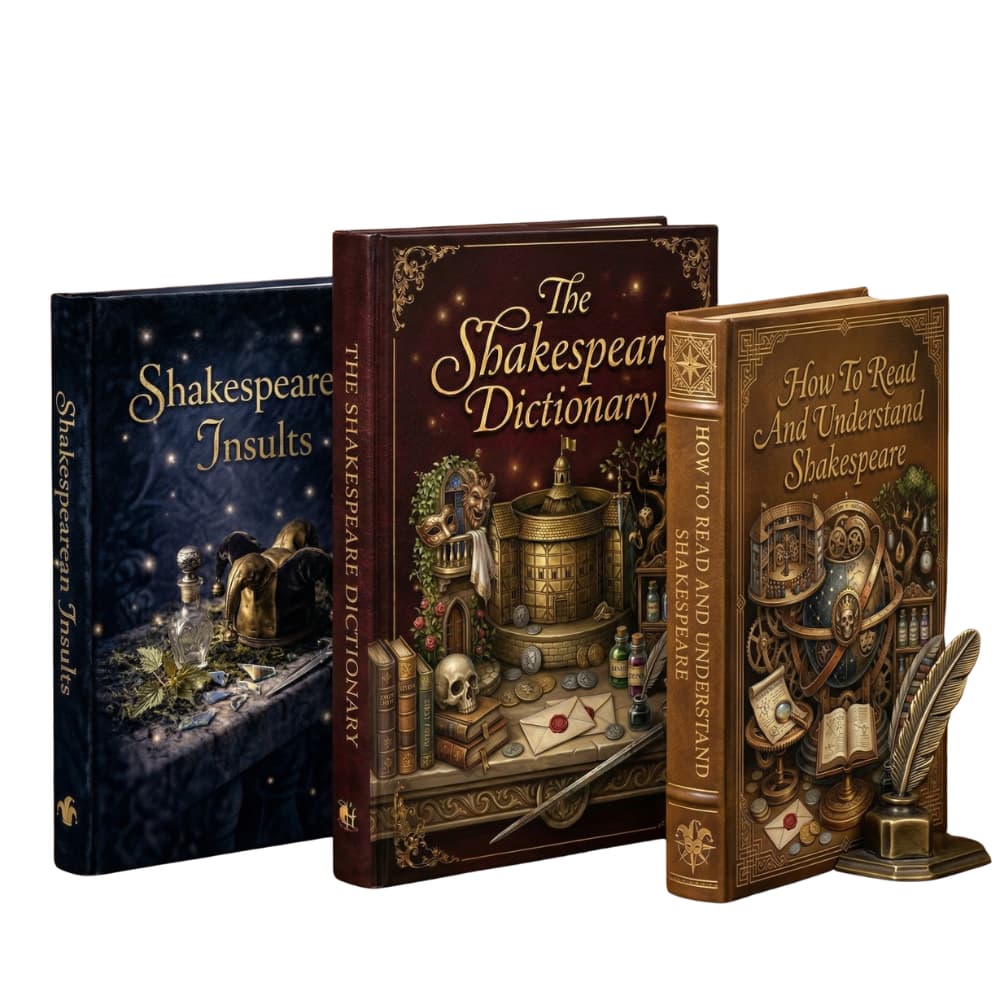
Shakespeare Essentials $19.99
Unlock the wit, wisdom, and world of William Shakespeare with this comprehensive digital bundle.
- How To Read And Understand Shakespeare
- The Shakespeare Dictionary
- Shakespearean Insults
This trio of guides provides everything you need to conquer the Elizabethan era.
Henry VI Part 3 Vocabulary Quiz Questions
- The word “banish” means
- “Affliction” in the play refers to
- The word “piteously” modifies speech that is
- “Enmity” means
- The term “oath” signifies
- When used of soldiers, “valiant” means
- The word “betray” is best defined as
- The term “piteous heart” implies
- “Disdain” most nearly means
- The word “wrangling” in the play refers to
- The term “slain” means
- “Deceit” in context means
- When a noble speaks of “grievous wrong,” “grievous” conveys
- The word “crownèd” in Shakespeare’s diction refers to
- “Cowardice” is best defined as
- The term “hearken” means
- “Renown” most nearly means
- The word “piteous deed” implies an act that is
- When a character says “revenge,” they mean
- In the play, the word “piteous” most nearly means
- The term “usurp” as used in the play means
- When Shakespeare uses “wrath,” it refers to
- The word “vexed” in context most nearly means
- “Reproach” in the play carries what meaning?
- The term “foe” means
- In the context of battle scenes, “valor” refers to
- The word “peril” is best defined as
- When a character speaks of “treachery,” they mean
- The term “lament” in the play means
- When Shakespeare uses “piteous moan,” what does “piteous” convey?