
To what end does Shakespeare use the device of the farcical disguise to reveal the inner truth of the motivations of his characters? The play is a masterclass in the use of situational irony and physical comedy in order to satirise the social ladder of the Elizabethan era. Now, learn all about the mechanics of the script with this The Merry Wives Of Windsor Literary Devices Quiz.

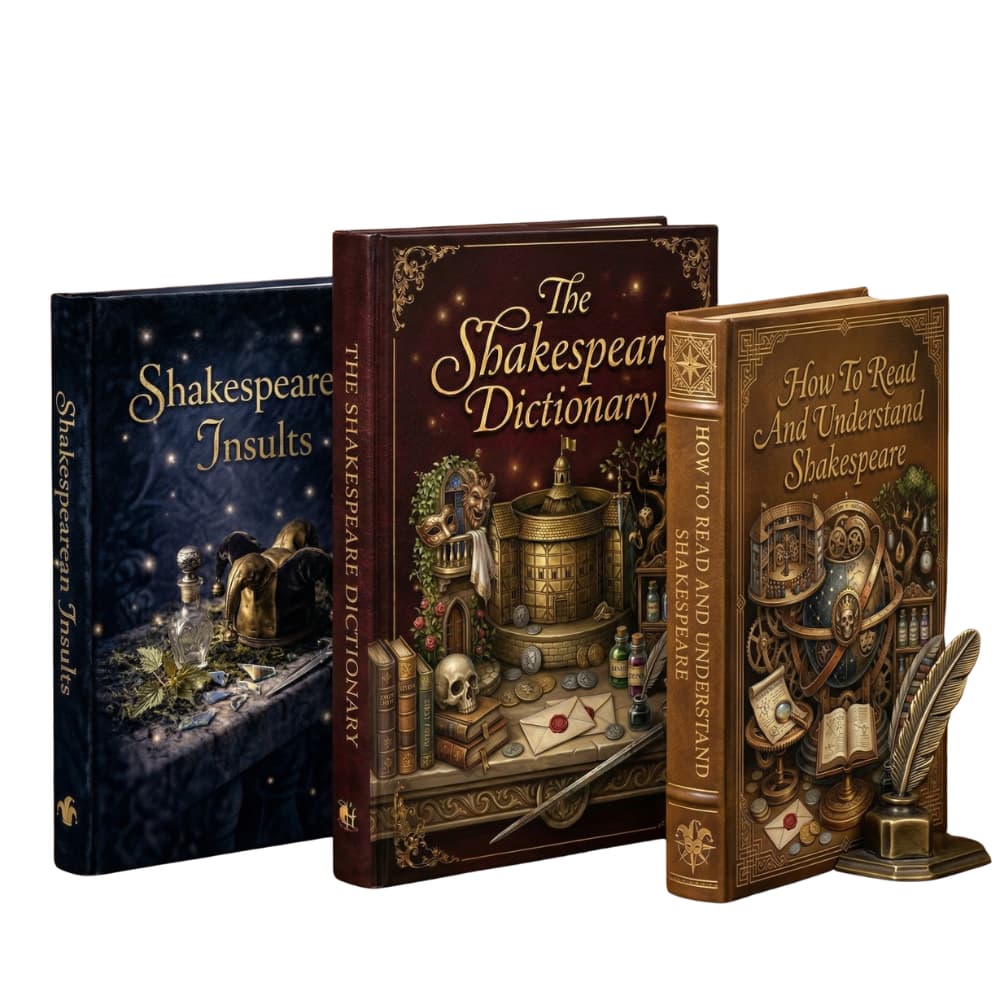
Shakespeare Essentials $19.99
Unlock the wit, wisdom, and world of William Shakespeare with this comprehensive digital bundle.
- How To Read And Understand Shakespeare
- The Shakespeare Dictionary
- Shakespearean Insults
This trio of guides provides everything you need to conquer the Elizabethan era.
The Merry Wives Of Windsor Literary Devices Quiz Questions
- What literary device is primarily used in Falstaff’s repeated humiliations throughout the play?
- What device is present when Mistress Ford and Mistress Page outwit Falstaff in identical situations?
- When Mistress Ford hides Falstaff in a laundry basket, what device creates humor through contrast between appearance and reality?
- What literary technique is used when Ford disguises himself as “Brook”?
- What is exemplified in the character of Falstaff, representing gluttony, vanity, and foolishness?
- When Falstaff refers to himself as “a knight that loves not to be disdained,” what device does he use?
- What device is central to the theme of wives deceiving Falstaff for moral justice?
- What literary technique is used in Mistress Quickly’s misuse of language and mixed-up phrases?
- When Falstaff is compared to “Herne the Hunter,” what device is used?
- The play’s tone of humor built through miscommunication and mistaken identity demonstrates what device?
- When Mistress Page says, “Wives may be merry and yet honest too,” what device is evident?
- What form of figurative language is found when Ford calls jealousy “a monster”?
- What literary device is at work when the wives' letters mirror each other word for word?
- Falstaff’s exaggerated confidence in his charm is an example of which device?
- What device appears when Evans and Caius misunderstand each other due to accent and language?
- The use of regional dialects, such as Welsh and French, illustrates what technique?
- When Falstaff disguises himself as an old woman, what literary device enhances the humor?
- What device is found in Ford’s constant suspicion and false conclusions?
- When the wives join to expose Falstaff’s flaws, what narrative technique supports the moral tone?
- The fairy prank scene at Herne’s Oak includes what form of symbolism?
- The interplay between jealousy and deception throughout the play reflects what recurring literary motif?
- When Falstaff calls himself “a subject to laughter,” what device does Shakespeare employ?
- What element of comedy arises from Falstaff’s overconfidence despite repeated failure?
- What is the purpose of using puns and wordplay in the servants’ dialogue?
- What device is found in Mistress Quickly’s repetition of polite words like “indeed” and “truly”?
- The character names “Slender” and “Shallow” represent what literary device?
- What device is demonstrated in Falstaff’s claim that he is “as poor as Job, but not so patient”?
- The play’s ending, where laughter replaces punishment, is an example of what structural device?
- When Mistress Page and Mistress Ford narrate their plans aloud, what device does Shakespeare employ to involve the audience?
- What literary technique underlies the duel that never happens between Caius and Evans?