
Why does the use of animal imagery and prophecy lift a simple history to a psychological masterpiece? In this Richard III Literary Devices Quiz, you will analyse the Bard’s craft in an effort to deepen your understanding of the metaphors and dramatic irony. As you start, think about the power of the written word.

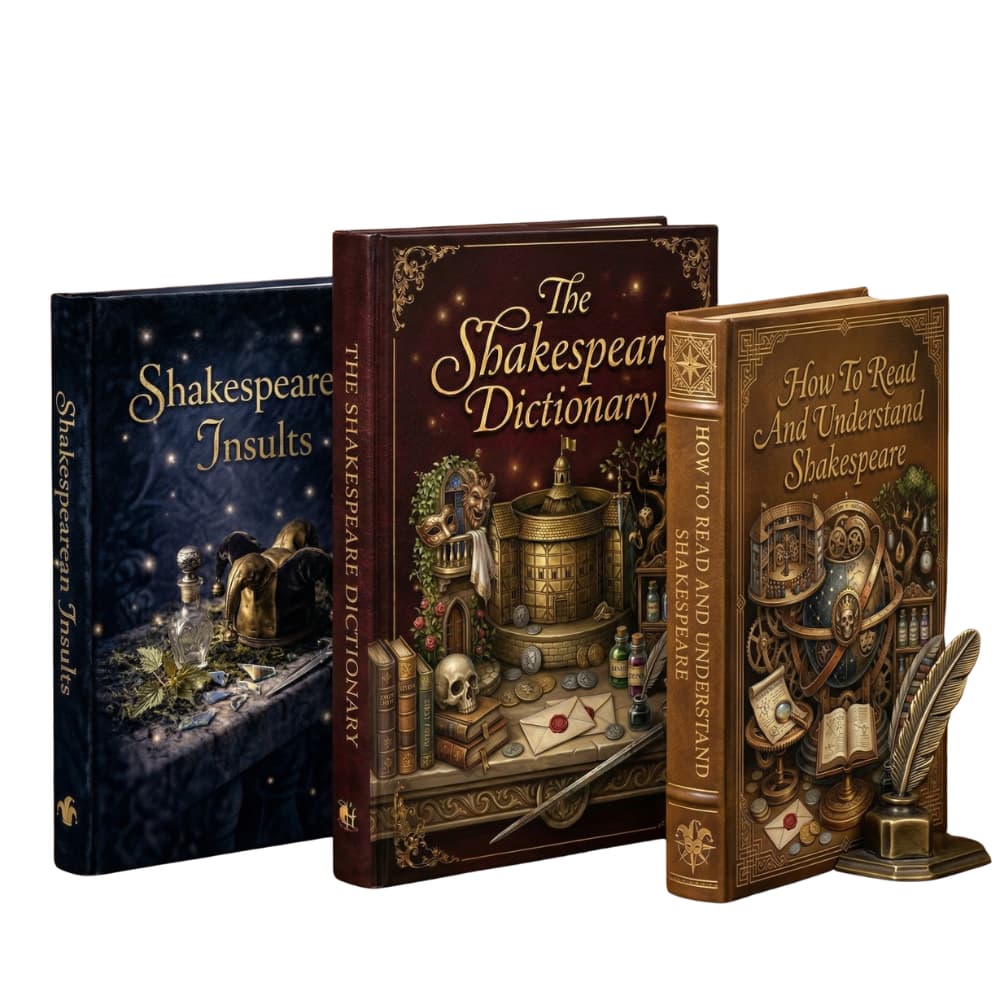
Shakespeare Essentials $19.99
Unlock the wit, wisdom, and world of William Shakespeare with this comprehensive digital bundle.
- How To Read And Understand Shakespeare
- The Shakespeare Dictionary
- Shakespearean Insults
This trio of guides provides everything you need to conquer the Elizabethan era.
Richard III Literary Devices Quiz Questions
- Queen Margaret’s curses serve as what literary function?
- The imagery of blood in the play symbolizes
- When Richard says “I am determined to prove a villain,” the device used is
- The boar symbol on Richard’s crest is an example of
- The use of ghosts to haunt Richard represents
- The recurring mention of the Tower of London is an example of
- When the audience knows Richard’s plans before other characters, this is
- The term “bloody deeds” is an example of
- When Richard compares himself to a spider, Shakespeare uses
- The prophecy about G in Act 1 is an example of
- The conversation between the murderers about conscience shows
- When Lady Anne calls Richard a “diffused infection,” this is
- The play’s repeated references to curses and dreams suggest
- When Richard manipulates language to sound innocent, Shakespeare uses
- The “winter” in the opening line represents
- The ghosts appearing to both Richard and Richmond create
- The character of Richmond functions as Richard’s
- The imagery of light versus darkness in the final act represents
- Richard’s deceptive charm is conveyed through
- When Shakespeare gives human traits to abstract ideas like conscience, he uses
- The women’s lamenting scenes emphasize
- The ghosts addressing both Richard and Richmond in turn highlight
- What literary device is used in the line “Now is the winter of our discontent”?
- When Richard speaks directly to the audience about his schemes, Shakespeare uses
- The ghosts appearing before Richard’s battle represent what literary device?
- The line “A horse! A horse! My kingdom for a horse!” demonstrates
- When Richard pretends to be pious, Shakespeare uses
- The repeated references to deformity symbolize
- The curse motif throughout the play represents
- Richard’s manipulation of others is an example of