
The hand falls and the Andronici are wrapped in despair like a heavy shroud. This Titus Andronicus Act 3 Quiz tests the depth of the general’s grief and the onset of planned madness.

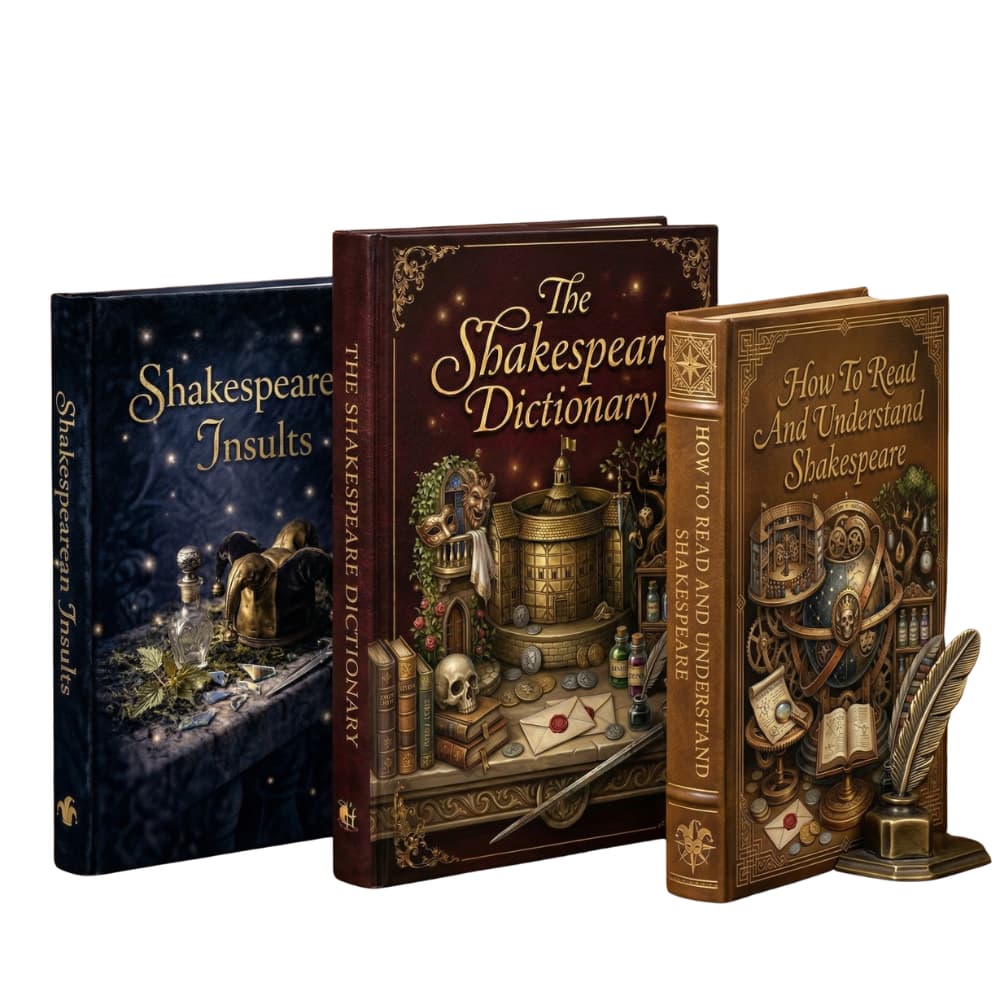
Shakespeare Essentials $19.99
Unlock the wit, wisdom, and world of William Shakespeare with this comprehensive digital bundle.
- How To Read And Understand Shakespeare
- The Shakespeare Dictionary
- Shakespearean Insults
This trio of guides provides everything you need to conquer the Elizabethan era.
Titus Andronicus Act 3 Quiz Questions
- Where does most of Act 3 take place?
- Who pleads for the lives of Titus’s condemned sons at the start of Act 3?
- What punishment awaits Quintus and Martius?
- What symbolic act of cruelty defines this act?
- Who tricks Titus into cutting off his hand?
- What promise does Aaron make to Titus?
- Whose hand is actually cut off?
- What gruesome discovery follows immediately after Titus’s sacrifice?
- Who brings the heads of Quintus and Martius to Titus?
- How does Titus respond to the sight of his sons’ heads?
- What emotion dominates Titus’s behavior in this act?
- Who comforts Titus after his loss?
- How does Marcus attempt to console Titus?
- What does Lucius decide to do after his brothers’ deaths?
- Where does Lucius flee to gather forces?
- Who encourages Titus to take revenge against Tamora’s family?
- How does Lavinia communicate without hands or a tongue?
- What does Lavinia write to reveal her attackers?
- What book does Lavinia use as reference for her suffering?
- What myth parallels Lavinia’s story in Ovid’s Metamorphoses?
- How does Titus react to learning who attacked Lavinia?
- What emotion does Marcus show when Lavinia writes the names?
- What action does Titus take to prepare for revenge?
- What does Titus’s laughter throughout the act symbolize?
- Who is revealed as Tamora’s secret lover?
- What does Aaron plan for his unborn child with Tamora?
- What theme is strongest in Act 3?
- What does Titus’s suffering symbolize in the play’s broader context?
- How does Act 3 conclude?
- How does this scene contribute to the play’s comic structure?