
What if madness is the only sane response to a world that has lost all sense of law and mercy? Titus hurls arrows at the gods in a desperate cry for justice This is a key part of our Titus Andronicus Act 4 Scene 3 Quiz. First, think about the consequences of his actions.

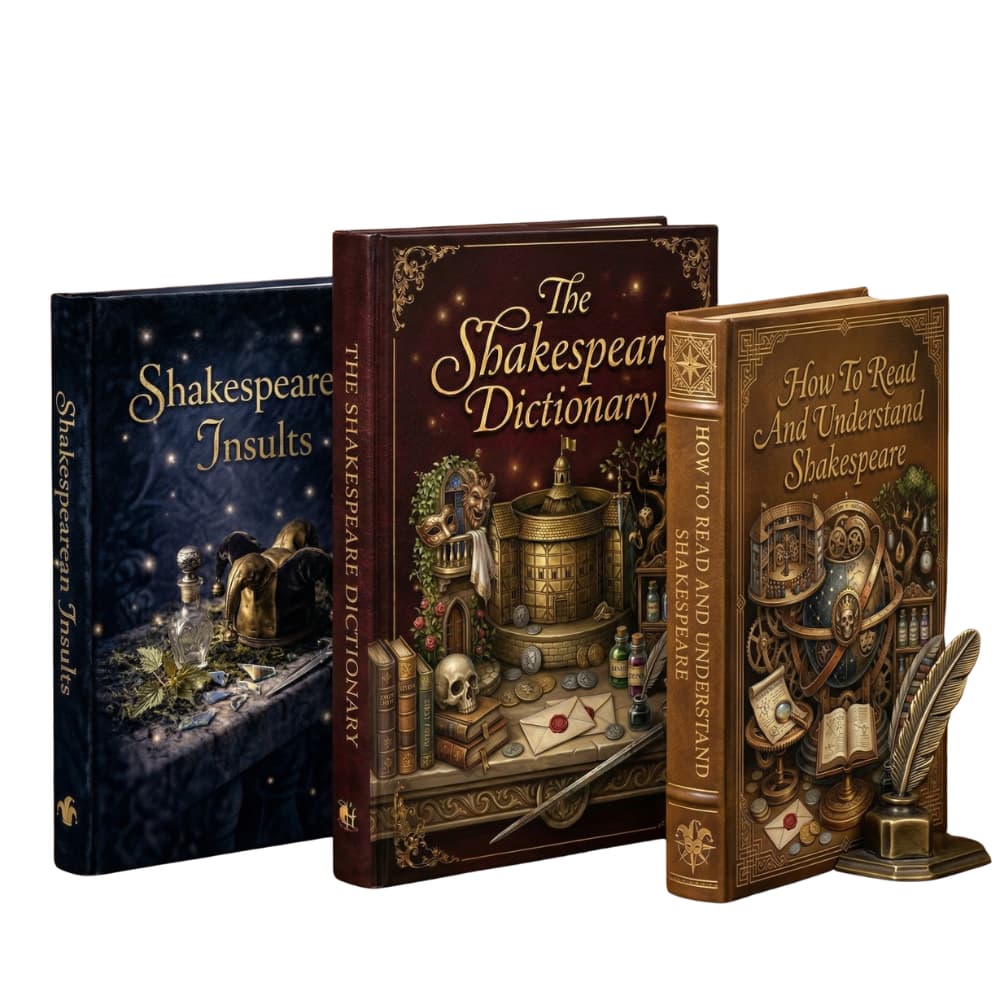
Shakespeare Essentials $19.99
Unlock the wit, wisdom, and world of William Shakespeare with this comprehensive digital bundle.
- How To Read And Understand Shakespeare
- The Shakespeare Dictionary
- Shakespearean Insults
This trio of guides provides everything you need to conquer the Elizabethan era.
Titus Andronicus Act 4 Scene 3 Quiz Questions
- Where does Act 4 Scene 3 take place?
- Who is present with Titus at the start of the scene?
- What are Titus and his family doing at the beginning of the scene?
- What do the arrows in this scene carry?
- Why does Titus shoot arrows toward the heavens?
- To which gods does Titus address his appeals?
- What does Marcus say about Titus’s actions?
- What literary device dominates Titus’s appeals to the gods?
- What does Lavinia do during this scene?
- Who delivers letters on Titus’s behalf?
- What object does the clown carry?
- To whom does Titus send the clown?
- What message is the clown told to deliver?
- What does Titus hope the gods will grant him?
- How does Marcus interpret Titus’s madness?
- What symbol is most associated with Titus’s arrows?
- What emotion drives Titus throughout this scene?
- How does Lavinia respond to her father’s grief?
- What does Titus say about his sorrow?
- What does the clown misunderstand about Titus’s request?
- Who is supposed to receive the petitions from the arrows?
- What theme is reinforced by Titus’s prayer to the gods?
- What does this scene reveal about Titus’s mental state?
- How does Shakespeare use imagery in this scene?
- What does the clown’s presence provide in the scene?
- What animal imagery appears in this scene?
- What tone dominates the dialogue between Titus and Marcus?
- What do Titus’s actions foreshadow?
- What does Marcus call the arrows?
- What does this scene mark in the play’s structure?