
Two households, both alike in dignity, In every street you shall these stories hear. The Romeo And Juliet Prologue Quiz will take you beyond the famous opening lines and look at the structure of the sonnet itself. Start at the very start.

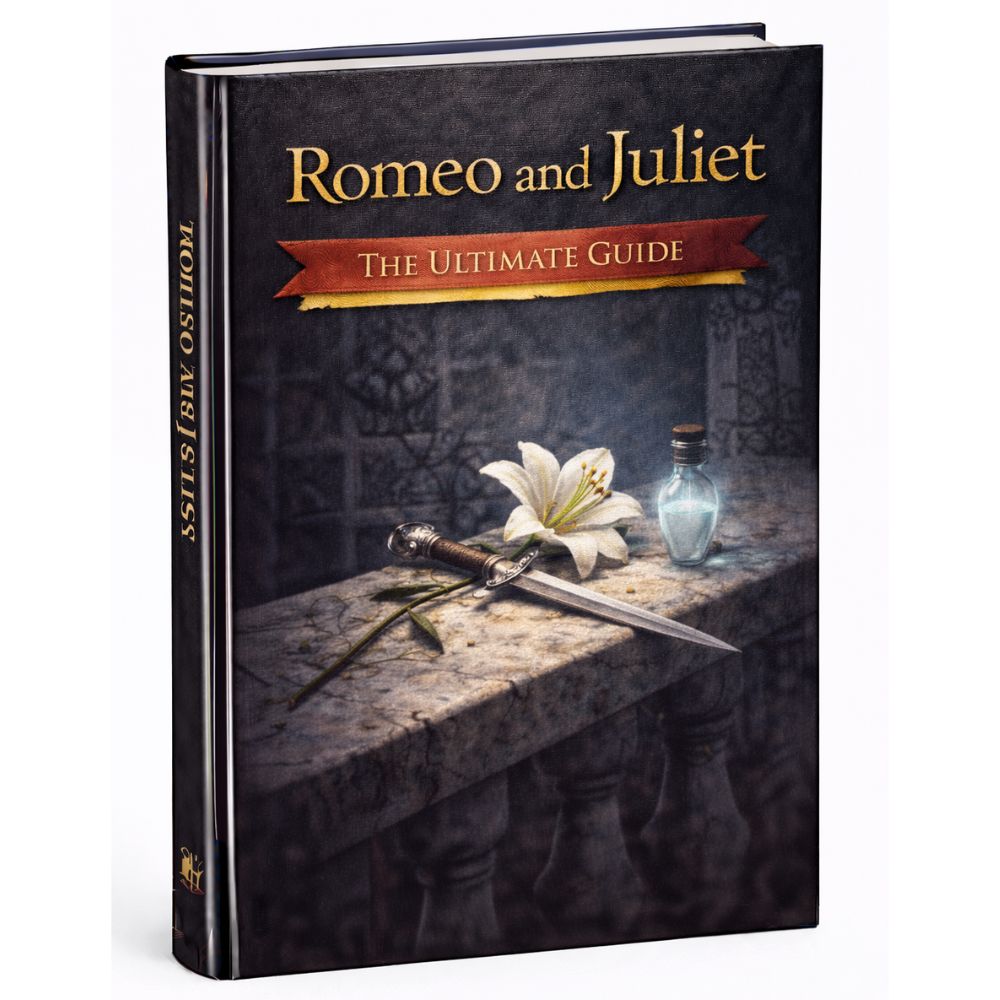
Romeo and Juliet | The Ultimate Guide $19.99
We’ve distilled decades of academic scholarship into a high-density toolkit designed specifically for the modern exam.
- 🗣️ The Rhetoric Toolkit
- 🗺️ Relationship Mapping
- ⚖️ Power & Status Matrix
A 50-page masterclass in themes, motifs, and dramatic irony.
Romeo And Juliet Prologue Quiz Questions
- Who delivers the Prologue in Romeo and Juliet?
- What poetic form is used in the Prologue?
- How many lines are in the Prologue?
- What rhyme scheme does the Prologue follow?
- Where is the play set according to the Prologue?
- What word describes the families in the Prologue?
- What phrase refers to the lovers’ doomed fate?
- What ends the ancient grudge mentioned in the Prologue?
- How are Romeo and Juliet described in the Prologue?
- What does the Prologue reveal about the play’s outcome?
- What do the families’ deaths symbolize?
- How does the Prologue function in the play?
- What literary device is most evident in “star-crossed lovers”?
- What word best describes the tone of the Prologue?
- Who are the “foes” mentioned in the Prologue?
- What does the word “mutiny” suggest in the Prologue?
- What does “doth with their death bury their parents’ strife” mean?
- How does the Prologue describe the lovers’ passion?
- What is the main theme introduced in the Prologue?
- What does the Prologue call the story’s time frame?
- What does “ancient grudge” imply?
- What does “fatal loins” refer to?
- What contrast is set up between the families?
- What does the Prologue ask the audience to do?
- Who are the “children’s end” meant to impact?
- What poetic meter is used throughout the Prologue?
- What mood is established by the Prologue?
- Why is the Prologue important structurally?
- What does the word “pitious” suggest in the phrase “pitious overthrows”?
- How does the Prologue prepare the audience for the play?