
And what if the air is most nimble and sweet the instant a guest steps into a trap from which he will never escape? The Macbeth Act 1 Scene 6 Quiz asks about the dramatic irony of the arrival of the king at the castle. Before the first question, consider the deceptive hospitality of the hosts.

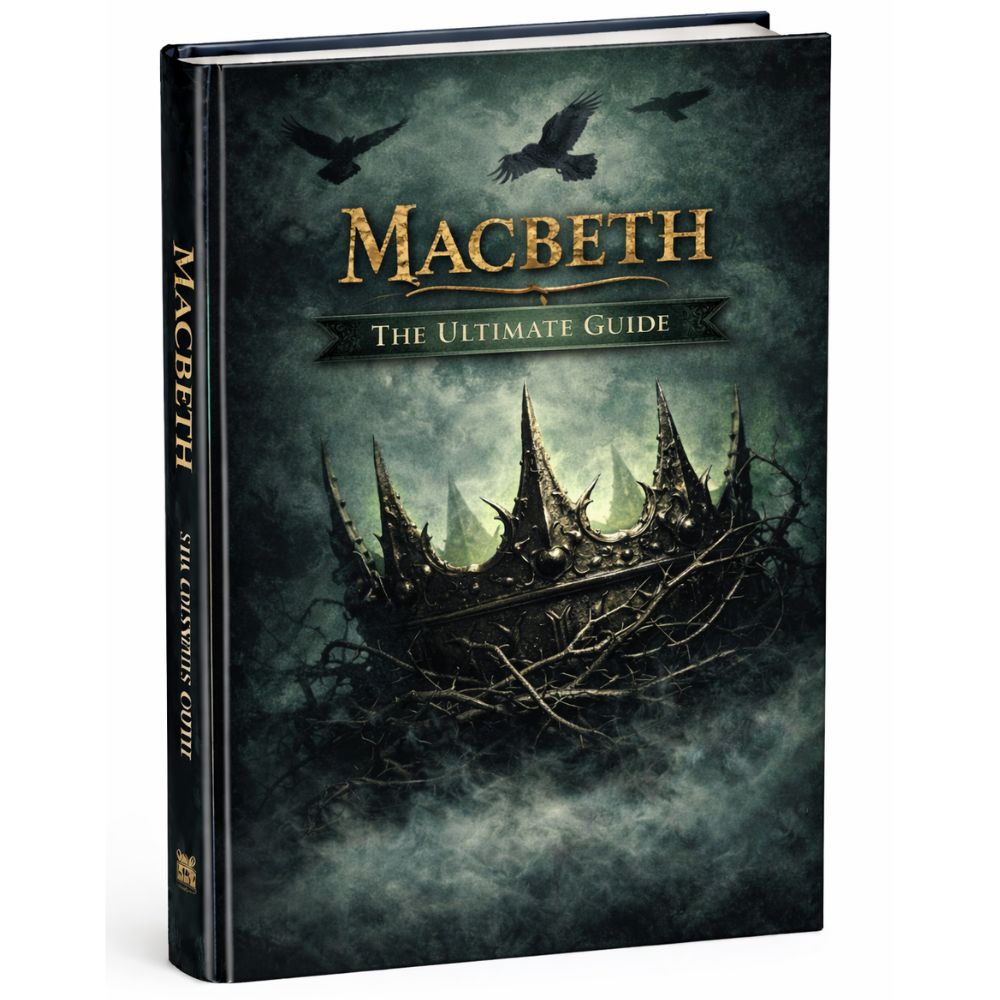
Macbeth | The Ultimate Guide $19.99
Macbeth isn’t just a story about a murder.
It’s a psychological deep-dive into the destruction of the human soul. If you want to stand out, you need to go beyond the surface level.
- 📜 Context That Actually Helps
- ⚠️ Common Traps
- 🩸 Motifs and Symbols
A 50-page masterclass in themes, motifs, and psychological warfare.
Macbeth Act 1 Scene 6 Quiz Questions
- Where does Act 1 Scene 6 take place
- Who arrives at Macbeth’s castle in this scene
- Who comments on the pleasant appearance of Macbeth’s castle
- What literary device is used when Duncan remarks on the castle’s pleasant air
- What is ironic about Duncan’s praise of Inverness
- Who greets Duncan upon his arrival
- How does Lady Macbeth address Duncan
- What does Duncan call Lady Macbeth during their greeting
- What does Duncan say about Macbeth in this scene
- What does Banquo notice about the air around the castle
- What birds does Banquo mention while admiring the castle
- What is the martlet symbolic of in Banquo’s speech
- What emotion does Lady Macbeth display when welcoming Duncan
- What does Lady Macbeth promise Duncan
- What does Duncan plan to do during his stay
- What tone does Duncan’s speech carry as he arrives
- How does Duncan describe Lady Macbeth’s hospitality
- What theme is strongly highlighted by this scene
- What is Lady Macbeth secretly plotting as she welcomes Duncan
- What dramatic technique is created by Duncan’s trust in Macbeth
- What atmosphere does this scene create before Duncan enters the castle
- What does Duncan refer to Macbeth’s castle as
- What is the contrast between Duncan’s perception and reality
- What natural imagery reinforces Duncan’s mistaken trust
- How does Lady Macbeth hide her intentions
- What does the audience know that Duncan does not
- What bird does Lady Macbeth earlier associate with Duncan’s death
- What impression of Duncan is reinforced in this scene
- What mood closes the scene
- What does this scene primarily serve to do